InspirationWhodunnit

  • Subscribe to our RSS feed.
  • Twitter
  • StumbleUpon
  • Reddit
  • Facebook
  • Digg

Thursday, 18 March 2010

Nat White and the Fine Art of Beans

Posted on 04:45 by Unknown
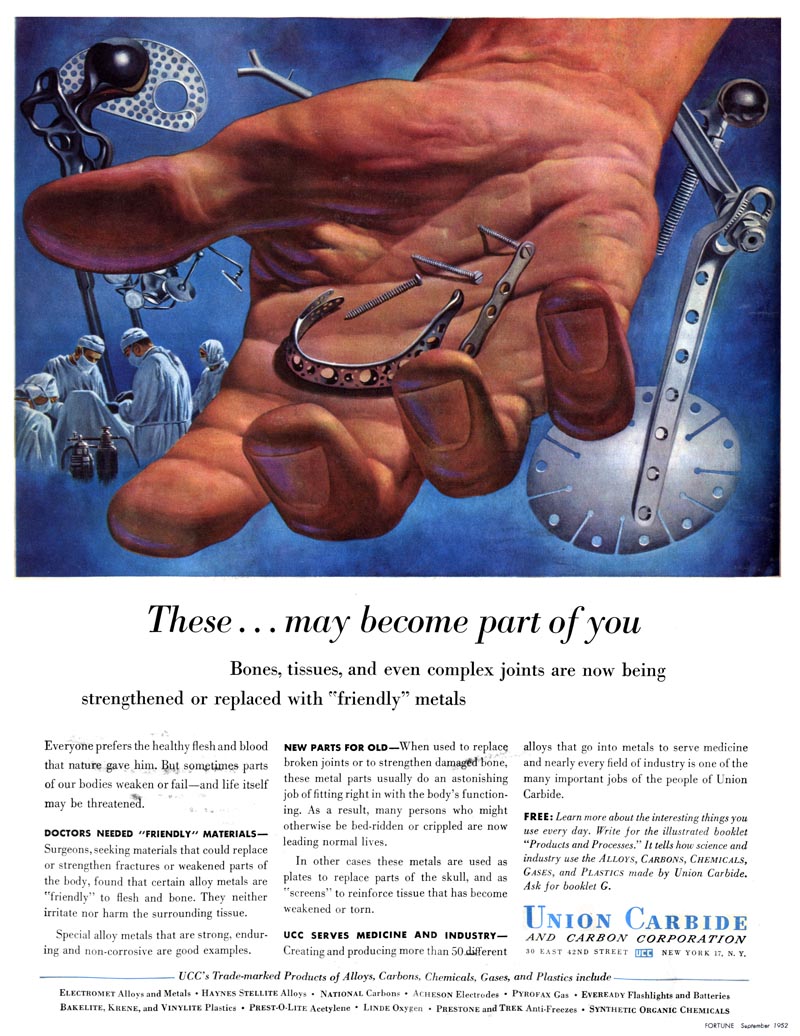
Yesterday we learned that Nat White was the illustrator responsible for many (most?) of those Union Carbide "Hand O' God" ads of the early 1950s. But the talented Mr. White wasn't only deifying the hands of common labourers... during that same period he worked on a wonderful series of ads for Stokley Van Camp's line of canned fruits and vegetables.


Those who regard advertising as crass and devoid of artistic merit should take a good look at these ads. This is realism, and it is idealized, but its a distinctly stylized version of the perfect world. Unlike the more typical Madison Avenue eye candy of that era, White's interpretation of his subjects was as personal as a fingerprint.


Now I hope Nat's daughter and grandson (who may end up reading this at some point) don't take offense at where I'm going with this - because I really do love the artist's work - but over the years, as I've collected these ads, I've been intrigued by the unusual look of what I presume was White's efforts to portray cuteness in kids.

On occasion, as we see below, he pretty much hit the mark. This handsome little feller (though stylized in that very specific Nat White way) is the epitome of all-American boyish cuteness. Why I'll bet, after he finishes his burger, he's gonna go right out and throw a baseball or whittle a stick or something.


But then there's this kid, who is starting to look a little... odd...


And this guy... what's up with this guy? He looks like a 55 year old card shark who just swindled you out of your paycheque in Atlantic City.


And this kid - yikes! I call him "Nat White's Bean Eating Demon Child."


Just stare into those eyes for a minute and tell me you don't get the willies. And I didn't adjust the colours on this either - White actually painted Damien here with the glow of hellfire bottom-lighting his terrifying visage.


Again, I don't mean to disparage Nat White. I really do love his work. How he started out with the best of intentions and ended up painting pure evil will probably never be resolved. But the bigger mystery is...

... how the H-E-double-hockey-sticks did the art director, the ad agency and Stokely Van Camp all give their approval to print this scary artwork?!

* My Nat White Flickr set
Read More
Posted in | No comments

Wednesday, 17 March 2010

The Return of the Hand O' God!

Posted on 04:08 by Unknown
Last time I featured some examples of the Union Carbide "Hand O' God" series it prompted an impressive thread of 32 comments. Today, thanks to the remarkable revelations in comment #32, "the Hand" is back...


Dear Leif; this blog was just referred to me by our son, a videogame concept artist.

As a teenager, I saw my father, Nat White, painting most of the images you have of the Union Carbide paintings.


He was a humble but renowned illustrator working for Caulkins & Holden ad company, and savored doing these paintings from beginning to end. He was looking hard for the right hands to illustrate.


Then at "Hamburger Express" in Glen Cove, Long Island, I remember Dad whispering to Mom, "there they are, the hands!" Sure enough, a man sitting down the way had massive hands. He was a longshoreman in Brooklyn, and more than happy to come to Manhattan to have them photographed in a variety of poses.


Many years later, Dad came into a personal relationship with Jesus Christ. In his mind and ours, the utter hubris of the Union Carbide ads became a perfect vehicle for scriptural truths appropriate to each illustration.


Yet even before his New Birth, he painted these " a hand in things to come" with genuine awe.

Sincerely, Christine White Jorgensen, Florida

* Many thanks, Christine (and to your son) for clearing up the mystery of who was responsible for the Union Carbide ads. Nat White is another mid-century illustrator whose work I have long admired. Readers can see a small selection of his other ad artwork in my Nat White Flickr set.
Read More
Posted in | No comments

Monday, 15 March 2010

Mia Carpenter: "... what a wonderful thing drawing is."

Posted on 18:55 by Unknown
Last September, when I wrote very briefly about Mia Carpenter, someone commented how glad they were to see her work on Today's Inspiration. Since then I've managed to actually locate Mia and she and I have begun corresponding. Today, I'm thrilled to have Mia writing about her career, accompanied by more of her beautiful artwork :

Mia writes, "I studied at Art Center College of Design with Jack Potter, one of the greats of 1950s - '60s illustration. He taught fashion illustration and was a great influence. He so excited his students about his subject and made it possible for us to experience what a wonderful thing drawing is."


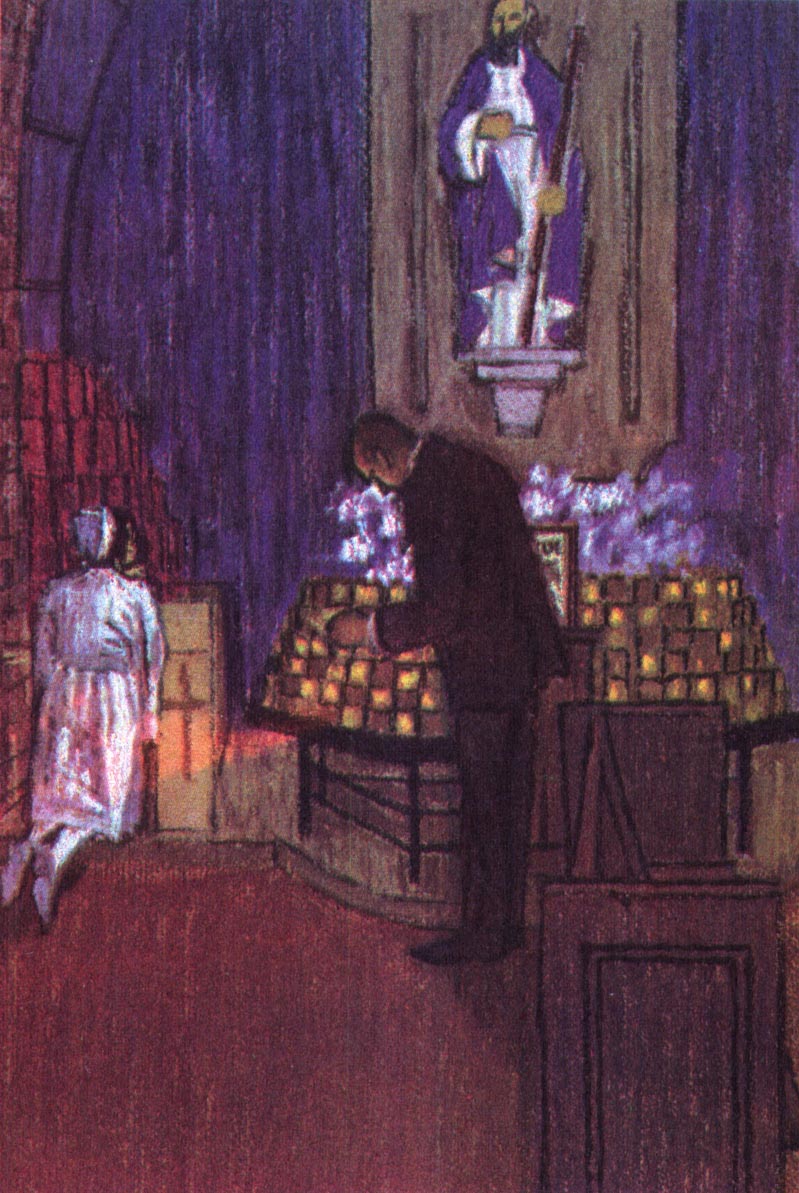
"The Impressionist painters were working their way into the public interest in the arts. My first art books were of their work and later the work of Bonnard, Vuillard, and Matisse."

"Graduated from Art Center College of Design 1956, married a month later to an ACCD design major. Moved to New York that August and continued to work and live there for the next 11 years. In NY there was an endless list of influences... Robert Weaver, Lorraine Fox, the fashion illustrators Eric (Carl Erikson), Sylvia Braverman, Evaline Ness, too many to list. As for illustrators that were personal friends... my closest friend was Miyo Endo who did a lot of work for Redbook. Robert Quackenbush was a buddy from AC who went on to be a noted children's book illustrator."

"My artist's representative was Joan Chasson who I could not have done without. Sarah Reader was my model for most years in Manhattan. I did a lot of work relating to kids. She could model for ages over 10 yrs. to the most sophisticated women with her slim agile body and ability to hold a pose. We did do photo reference but mainly did drawing from the live model for fashion as well as other kinds of illustration."


"Sometimes the drawings done directly from the model suficed as finished work. Sometimes, especially with story illustration, using tempera and acrylic painting and pastel work, I would start with drawings from the model sketches or from photos and always drew environments, perspectives, accessories etc. from reference. With the painted and pastel work I would incorporate the sketches and backgrounds and transfer them to board of some kind and then finish with the appropriate medium."


"Moved to Paris for 1 1/2 years where I cared for our daughter and John Hoernle, my ex husband, worked with a friend to start a small ad agency. We moved from Paris to Los Angeles and I have continued living and working in this city. I first worked in retail fashion illust. as I also had done in NY and when the bottom fell out of that field... started doing sketching for entertainment ad agencies."

"During the years of doing entertainment sketching it was often vital to draw from memory because of the deadlines. I grew to appreciate that approach having to constantly examine and trust what I thought I knew and could reproduce visually. "


"I have been very fortunate in my career to have worked steadily from the early NY days to retirement (around 2004), moving from LA to NY where illustration was flourishing in so many more areas than just story illustration. Every step in the almost 50 years of making a living that I loved involved really lucky timing. It goes without saying that being willing to work ceaselessly with difficult people and new challenges was a must while, in my case, being frightened of failure for more years than I'd like to admit."

* My Mia Carpenter Flickr set

* Mia has also now been added to the Female Illustrators of the Mid-20th Century blog.
Read More
Posted in | No comments

Jack Welch: Some Early History

Posted on 05:30 by Unknown
As promised when I last posted about him in January, here is some additional background information on Jack Welch, courtesy of his son-in-law, Bob, who enclosed the photo of the artist and the high school yearbook artwork you see below. Many thanks, Bob!

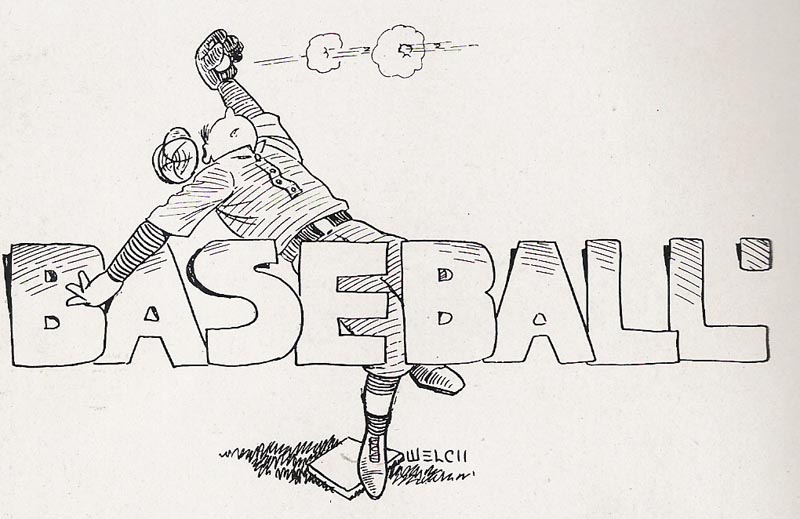
Bob writes, "Jack was born in Cleburne, Texas in 1905, the last of 5 children (he had two brothers and two sisters, the oldest of whom was 20 years Jack’s senior). Jack’s father was a grocer. Jack went to high school in Temple, Texas and was the illustrator for the yearbook. His drawings in the yearbook clearly foreshadow the style that was to come."


"Jack wanted to go to art school after high school, but the local minister told his family that being an artist was not a suitable profession so his parents sent Jack to SMU. He lasted a year there, but his desire to be an artist led him to leave home and leave school and head to Chicago where he changed his name to Roy Sim(m)s and began a career as a political cartoonist. At some point, Jack had a comic strip as well. The second attachment is a picture of Jack at this point of his life."


"I know little else of Jack’s time in Chicago, but at some point he moved to Greenwich Village where he met and married Ida Pilling, a transplanted Iowan who was a teacher in Leonia, New Jersey. Ida met Jack’s two major criteria for a mate, she was brilliant and she was as short as Jack was tall. Jack always felt that he was too tall and didn’t want his children to have that burden. The tall gene did bypass his girls, who are/were 5’7” but did go to our son who is 6’3”."


Bob concludes, "It was in New York that Jack did most of his work, producing the illustrations and advertising pictures for which he is best remembered."

And that's where I come in, adding these scans of some delightful Jack Welch advertising illustrations from my old magazine collection. I've arranged them so you can see how Welch's style matured during the 1940s...


... and into the early '50s. U.S. Keds was only one of his long-running advertising accounts.


It was during the 1950s that Welch produced the delightful Jello Animals series which was the subject of my first post on him back in 2007.


A final note from Bob: "[Jack] lived in Valhalla, a suburb north of NYC. He designed a color scheme for that village that included painting the commuter rail station pink."

Jack Welch died in 1985.

* My Jack Welch Flickr set.
Read More
Posted in | No comments

Friday, 12 March 2010

Martha Sawyers: Condensed

Posted on 10:13 by Unknown
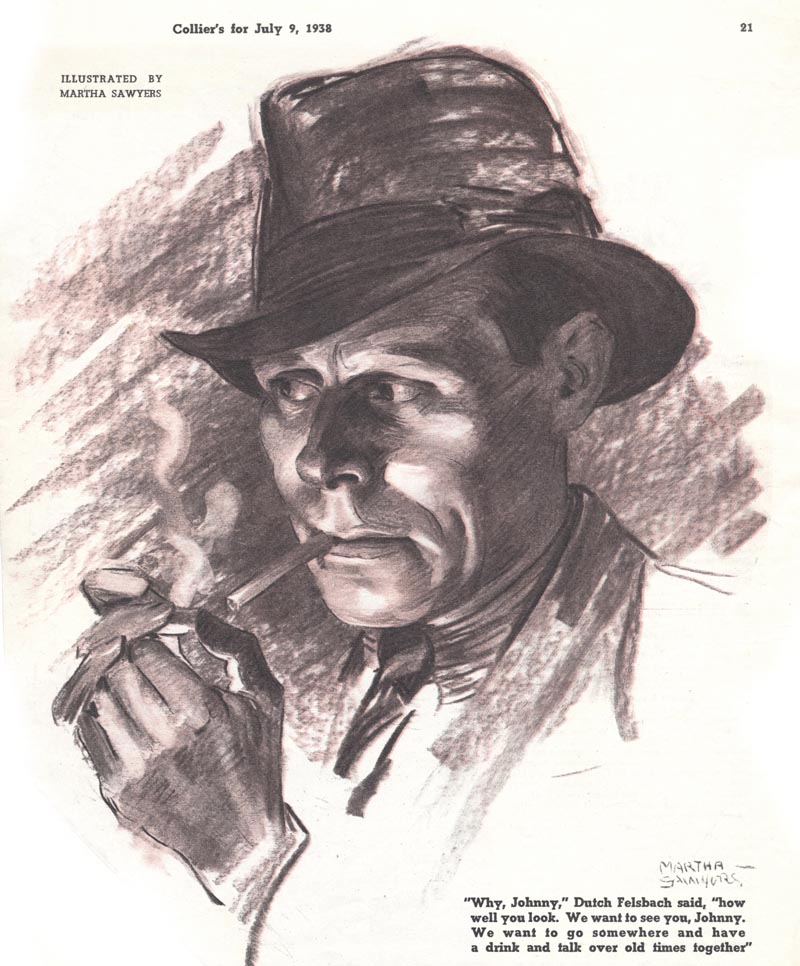
A couple of very cool examples of Martha Sawyer's earliest illustrations for Collier's, courtesy of TI list member David Apatoff.


David wrote a terrific post about Martha Sawyers on his excellent blog, Illustration Art.


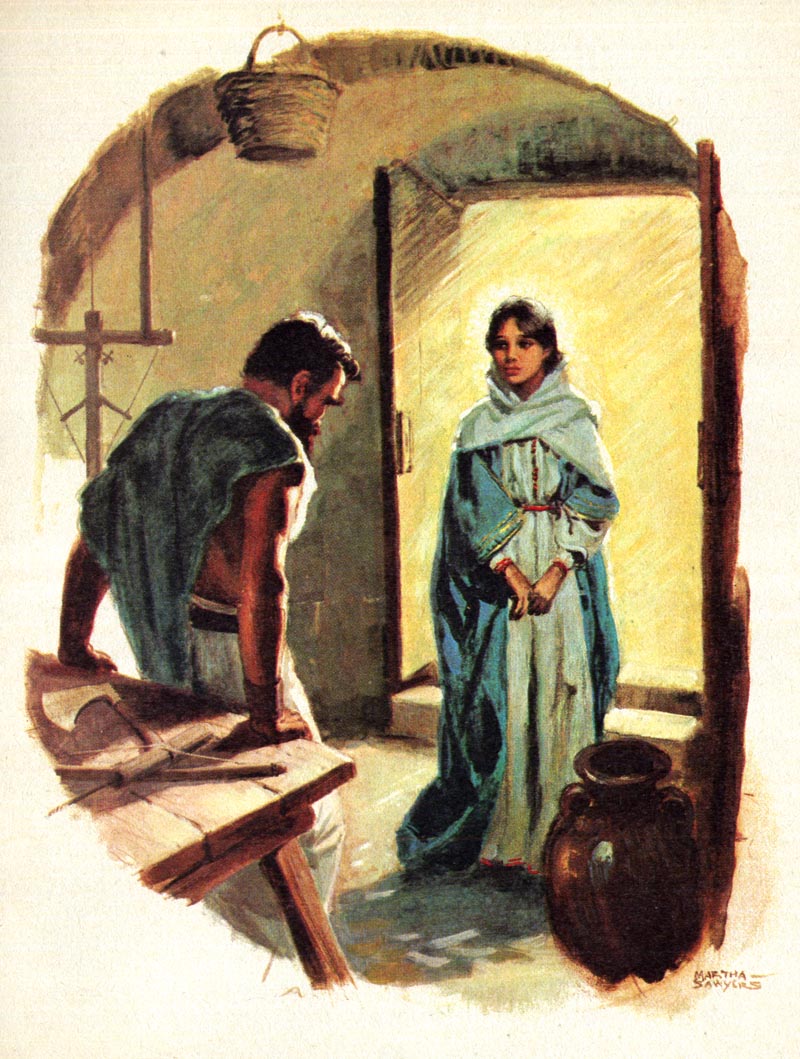
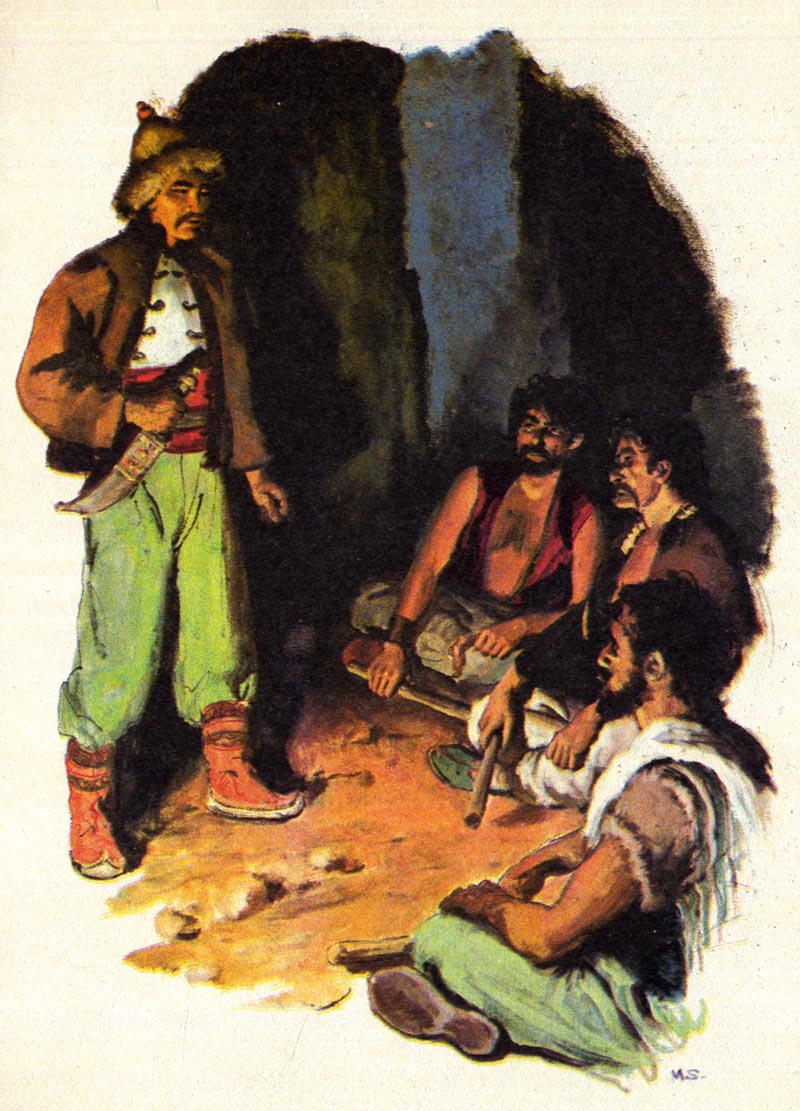
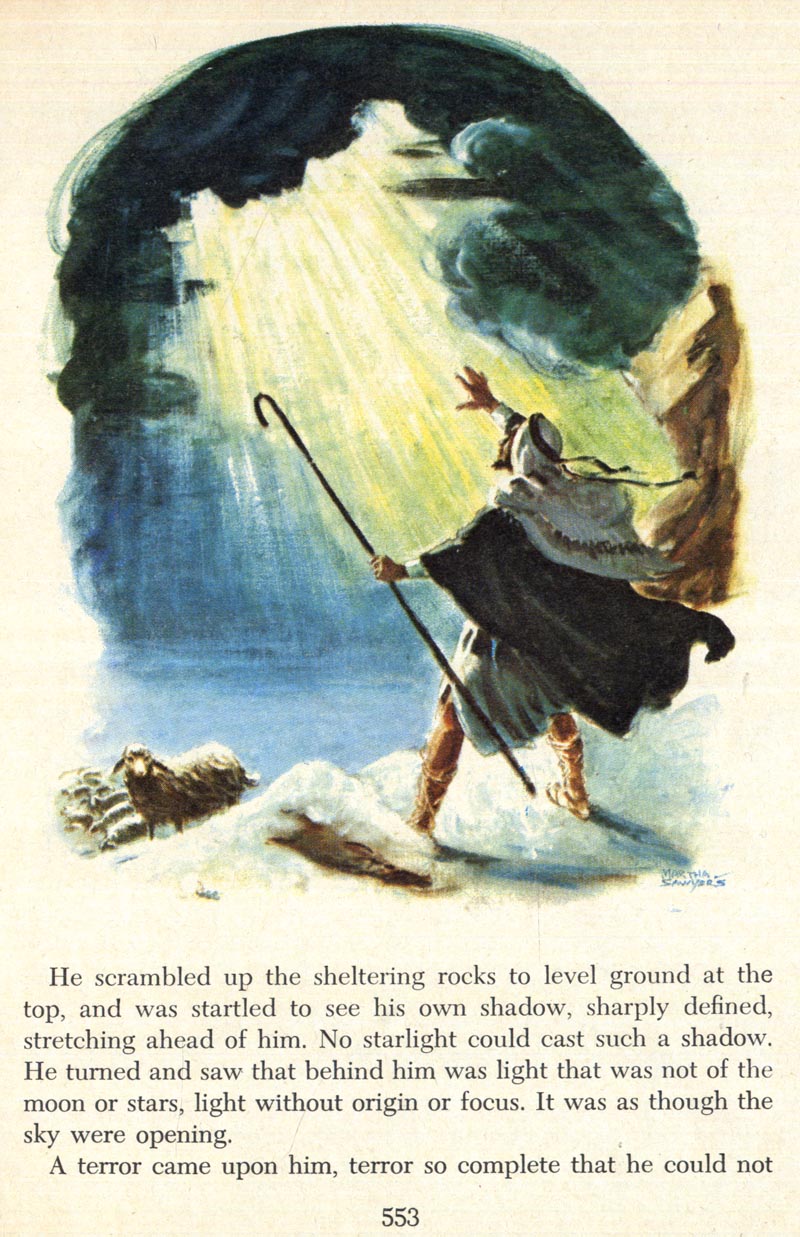
Fast forward three decades... here's the most current work I was able to find by Martha Sawyers, from Readers Digest Condensed Books, 1964.


The editors must have felt Sawyers was a natural choice for this version of the famous bible story of Mary and Joseph and the birth of Jesus.


Having travelled extensively in these regions, and being considered a specialist in illustrating the people of Asia, Sawyers was no doubt completely comfortable with the assignment.


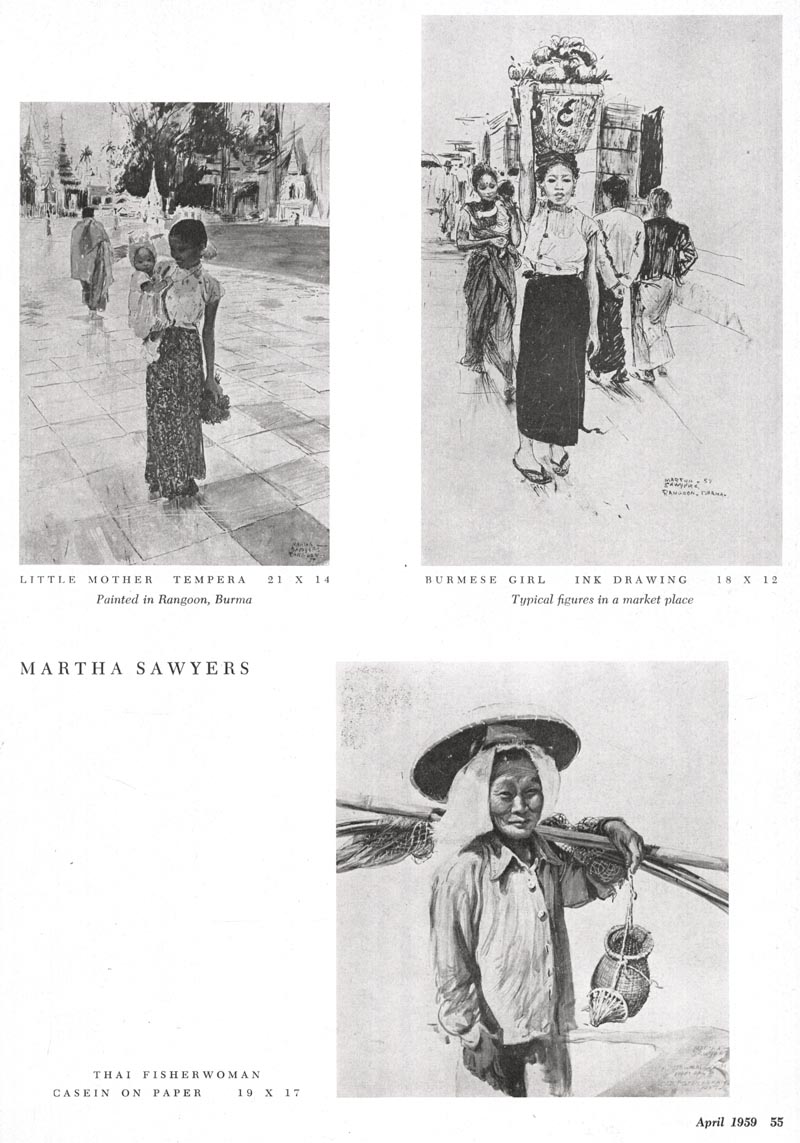
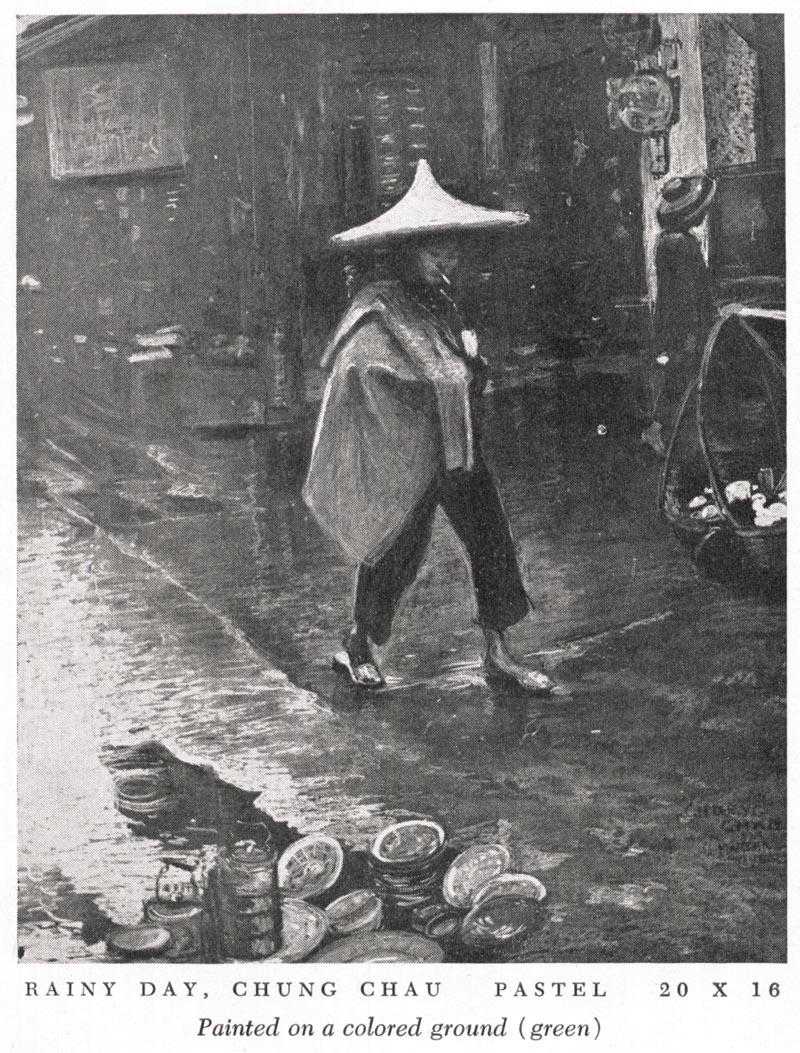
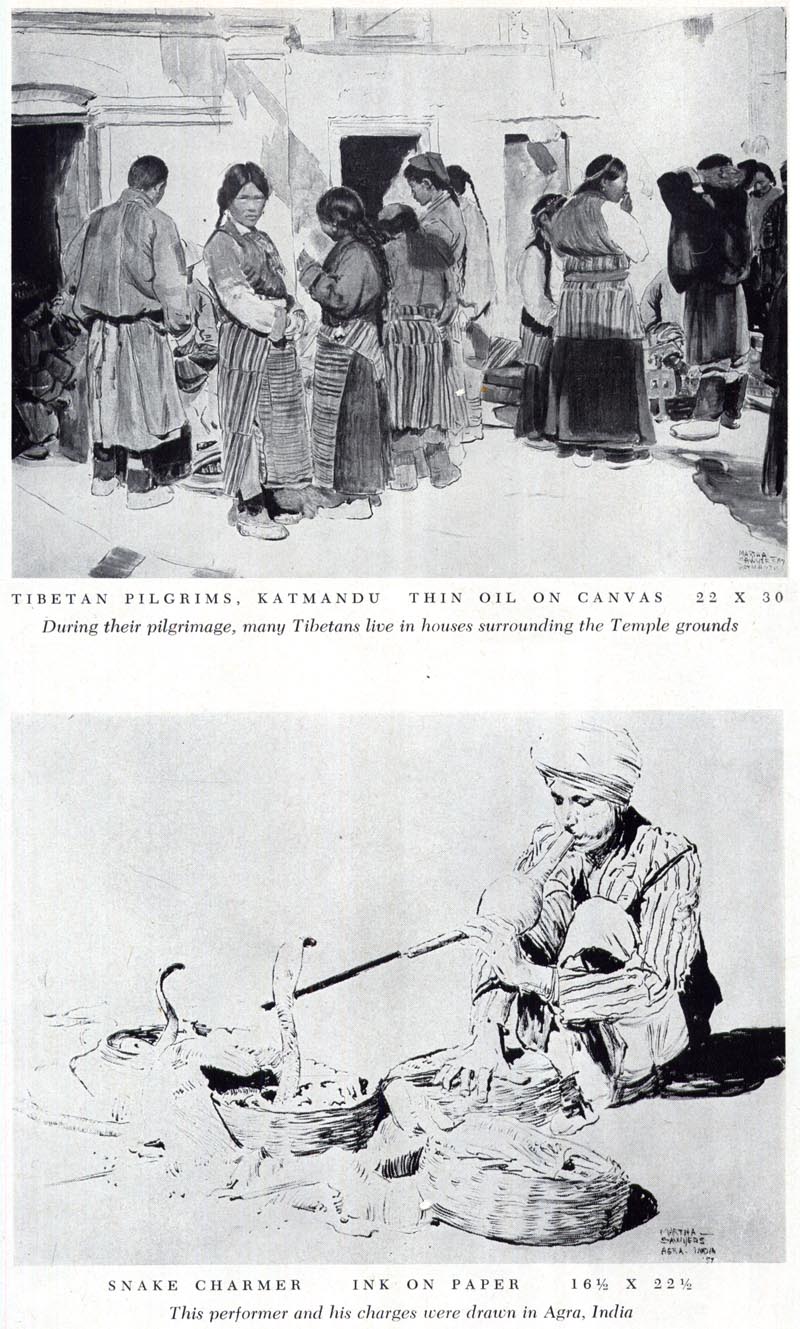
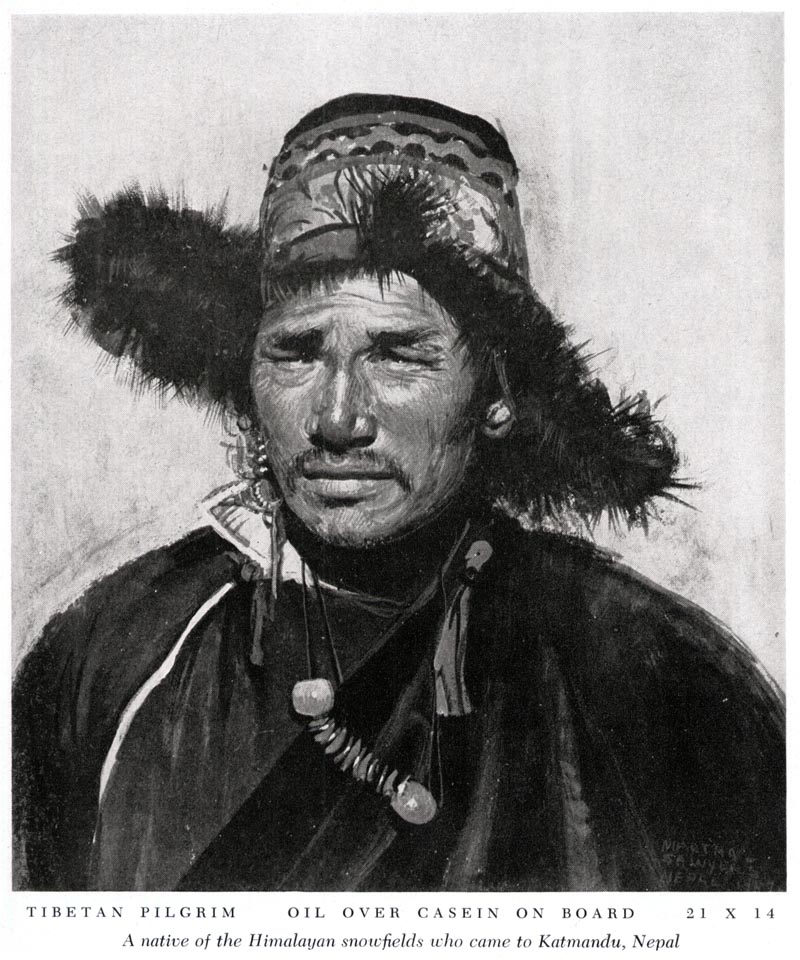
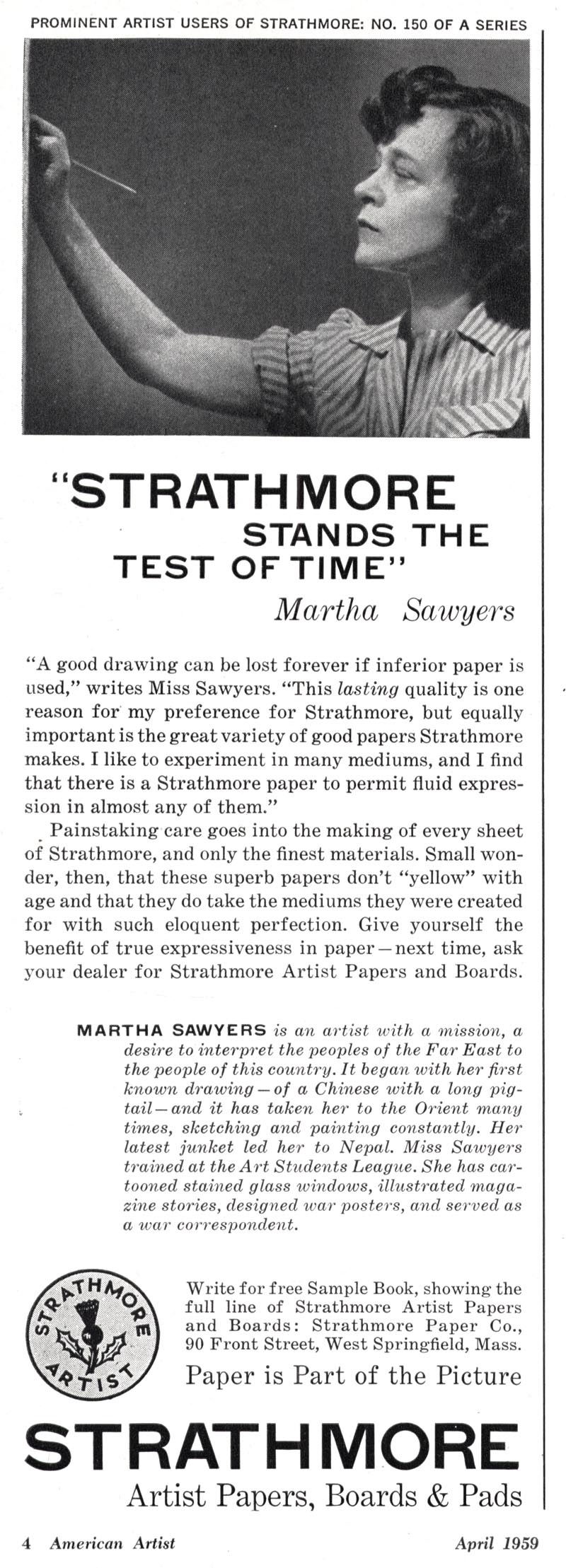
To research the people, places and costuming she would have had to look no further than those bulging portfolios of paintings and sketches mentioned by her husband in the American Artist article from April '59 - the accumulated wealth of that trip through all those many Eastern countries a year earlier.


Its interesting to see where one ends up when one "follows the bend of the river"...


In the early days of the 20th century, a young girl in Cuero, Texas, fascinated by a book called "Religion of the Far East" began a life-long journey of artistic and cultural discovery...


... a journey that lead, six decades later, to an assignment illustrating the story that is the centerpiece of Western religion.


Martha Sawyers, born in 1902, died in 1988.

* My Martha Sawyers Flickr set.

* These posts have been collected into one article on Female Illustrators of the Mid-20th Century
Read More
Posted in | No comments

Martha Sawyers: "... an insatiable desire to see far-away places and to make a record..."

Posted on 07:49 by Unknown
In early 1958, Martha Sawyers and husband Bill Reusswig once more felt the urgent pull of the Far East calling to them. They purchased plane tickets ($1,800 each) which were "good for a year and interchangeable with a dozen different airlines," and set out another adventure.


Writing for an article in the April 1959 issue of American Artist (just a little over a year after their return) Bill Reusswig reported, "The course was roughly planned but without reservations beyond Tokyo."


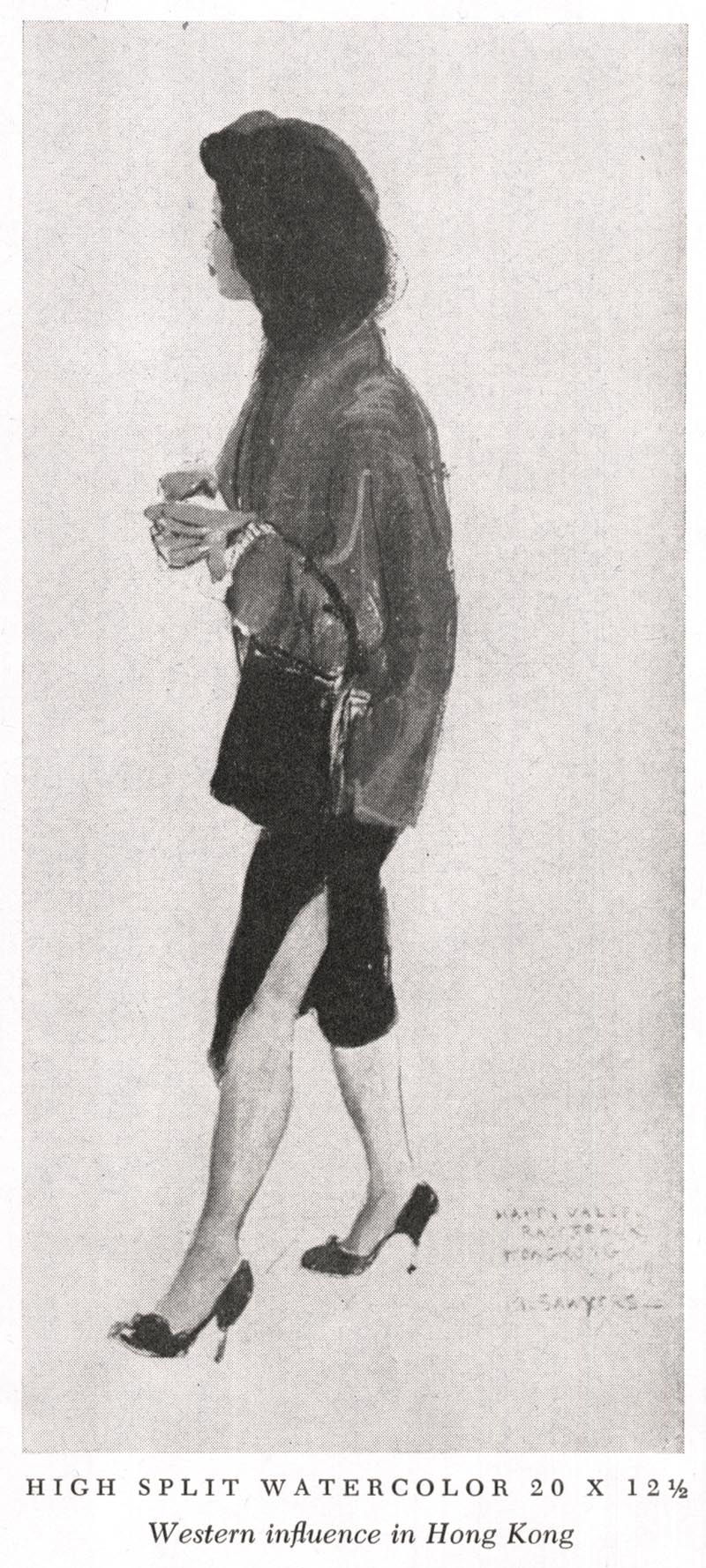
And what a course it was! The couple left their home in Milford CT, flew to San Francisco; then on to Honolulu, Wake Island, Tokyo, Hong Kong...


... Bangkok, Chiengmai, Rangoon, Calcutta, Patna, Katmandu...


... New Delhi, Agra, Jaipur, Bombay, Karachi...


... Istanbul, Athens, Rome, Paris, Madrid, Lisbon - and finally, after many long months and with bulging portfolios, by klipper ship back home to New York.


Reusswig said, "As we had covered a lot of this territory before, we wanted to feel free to 'follow the bend in the river'."

The couple often stayed in the humble homes of those who were the subjects of their drawings and paintings. Reusswig recounted, "Even though we did not speak their native tongue, a quick sketch was better than sign language. And even if you got lost, more often than not you could draw your way home."

These pieces are, I think, some of the best of Martha Sawyers work that I've seen. Even so, they barely begin to reflect the stories Reusswig describes in the article of the couple's year-long adventure!


He concludes, "The whole trip was a wonderful experience, and in addition to the memories it will always excite, we brought back enough authentic pictures and sketches to feed on for many months to come."

* My Martha Sawyers Flickr set.
Read More
Posted in | No comments

Martha Sawyers: Step-by-Step

Posted on 04:08 by Unknown
In the book, "Forty Illustrators and How They Work", we learn that Martha Sawyers studied with George Bridgman and George Luks at the Art Students League. Luks was a painter of "broad luscious brush-work" but Sawyers' approach was, we are told, more like that of a draftsman than a painter. It is suggested that she must therefore have "had greater sympathy for the teaching of Bridgman," the constructive anatomist.


Sawyers' first job after graduating was in a studio that made stained glass. There she learned a technique of painting with a needle, scratching into flat colour to derive tonal variations. The artist transposed this technique to her illustration work: laying down thin washes of oil paint heavily diluted with mineral spirits to facilitate fast drying. She would then build up form with "crayon-like" brush strokes of those same thin, rapidly drying oils.


Finally (returning to her earliest professional experience in the stained glass studio) Sawyers would scrape through the dried colour layers of paint with a knife, revealing the canvas base colour. The result is the familiar textural look - a look almost of a pastel or crayon drawing - so typical of a Martha Sawyers illustration.


* My Martha Sawyers Flickr set.
Read More
Posted in | No comments
Newer Posts Older Posts Home
Subscribe to: Posts (Atom)

Popular Posts

  • Howard Terpning, Magazine Illustrator
    Today most people think of Howard Terpning as one of America's premier western art painters. Terpning's prints and paintings can be...
  • The Art of Summer Reading: Ed Vebell
    I can still vividly recall one particular day from my childhood: I was nine years old at the time. Summer vacation had started and my parent...
  • Michael Johnson: "I looked forward to being surprised, and always delighted, with what he produced."
    Guest author Bryn Havord introduces the early work of English illustrator Michael Johnson, covering the decade of his work, from the end of...
  • Haddon Sundblom: "[His paintings] have what people like!"
    In a June 1956 article on Haddon Sundblom in American Artist magazine, author Frederic Whitaker explains what makes Sundblom's work so ...
  • Model Kit Box Art by "the Two Roys"
    By Guest Author, Roger O'Reilly For anyone growing up in Britain or Ireland in the 70's and 80's who had half an interest in bui...
  • The Art of Summer Reading: Robert McCloskey
    I wonder if anyone else remembers the terrific "Henry Reed" series of chapter books, illustrated by Robert McCloskey. I've me...
  • John Severin (1921 - 2012)
    John Severin passed away yesterday. He was 90 years old. As a kid growing up in the '70s and completely obsessed with Marvel Comics...
  • Leon Gregori: "... he would draw and draw and draw."
    There are some illustrators of the mid-century whose work I have come across time and again in my collection of old magazines about whom the...
  • Harry Devlin (1918 - 2001)
    Here's the earliest piece I've ever found by Harry Devlin. Its from the 1947 New York Art Directors Annual and clearly demonstrate...
  • Bruce Johnson, Canadian Illustrator
    Here's a wonderful early '60s illustration by Canadian illustrator Bruce Johnson. Unfortunately, there isn't a lot of informatio...

Blog Archive

  • ▼  2013 (68)
    • ▼  August (3)
      • The Art of Summer Reading: Ed Vebell
      • The Art of Summer Reading: Mercer Mayer
      • The Art of Summer Reading: Robert McCloskey
    • ►  July (4)
    • ►  June (12)
    • ►  May (4)
    • ►  April (6)
    • ►  March (10)
    • ►  February (16)
    • ►  January (13)
  • ►  2012 (127)
    • ►  December (3)
    • ►  November (2)
    • ►  October (10)
    • ►  September (8)
    • ►  August (10)
    • ►  July (17)
    • ►  June (20)
    • ►  May (14)
    • ►  April (3)
    • ►  March (13)
    • ►  February (15)
    • ►  January (12)
  • ►  2011 (146)
    • ►  December (17)
    • ►  November (11)
    • ►  October (9)
    • ►  September (16)
    • ►  August (15)
    • ►  July (5)
    • ►  June (9)
    • ►  May (11)
    • ►  April (15)
    • ►  March (10)
    • ►  February (16)
    • ►  January (12)
  • ►  2010 (159)
    • ►  December (10)
    • ►  November (18)
    • ►  October (11)
    • ►  September (9)
    • ►  August (23)
    • ►  July (15)
    • ►  June (12)
    • ►  May (15)
    • ►  April (17)
    • ►  March (21)
    • ►  February (8)
Powered by Blogger.

About Me

Unknown
View my complete profile